Warmups pitch 6 min Tenor
The Descending Five-Tone Scale: The Safest First Warmup
If you only have five minutes before a rehearsal and your voice is not awake, start here. A descending five-tone pattern asks for the top note first, while you still have fresh air and low tension, and then lets the voice fall away from it.
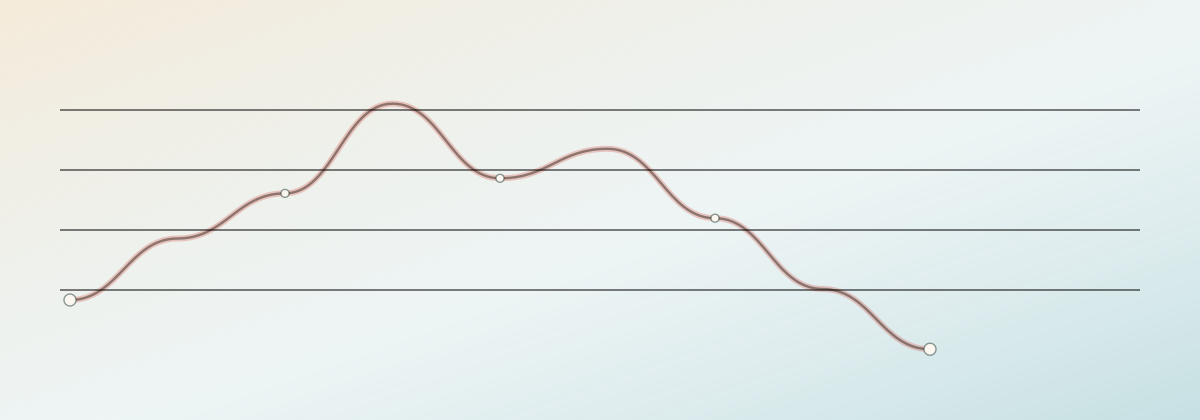
Why descending beats ascending
Ascending scales add pitch and effort at the same time: by the time you reach the top you are already carrying the tension of the notes below. Descending does the reverse — you place the highest note while the breath is full, and each note after it costs less. For a cold voice, that difference is the gap between warming up and straining.
The pattern and the tempo
On the syllable "mah", sing 5-4-3-2-1 at about 80 beats per minute, one note per beat, then rest for one full pattern before moving down a semitone. Ten repetitions cover a major ninth. A tenor starting at A4 and descending by semitones reaches about G3, which is a full warmup for most repertoire.
Where the tension hides
Watch three places: the jaw sliding forward, the chin lifting on the top note, and the shoulders rising on the breath. Each one adds effort that the folds then have to manage. A hand on the sternum and a mirror at eye level will catch all three in about ten seconds of singing.
Making five minutes count
Structure: two minutes of descending five-tone patterns, one minute of hummed glides, ninety seconds of the hardest phrase in your repertoire sung slowly, thirty seconds of silence. That last silence matters — it lets you hear whether the voice settled or tightened before you decide to keep singing.
Take these away
- Top note first, then let the voice fall — the safest order for a cold voice.
- Ten repetitions, one semitone apart, covers a major ninth.
- Watch the jaw, the chin and the shoulders; they leak effort into every note.
Asked in lessons
Can I use this as my only warmup?
For a short rehearsal or a speaking engagement, yes. For a full concert or a high-intensity session, add sirens and NG hums — five-tone patterns do not cover the extremes of the range.
How loud should the top note be?
No louder than the note below it. If the pattern swells toward the top, the extra volume is standing in for support, and it will cost you by the tenth repetition.
Should I transpose up as well as down?
Only after eight warm repetitions. Working upward early in a session is how a small amount of morning hoarseness turns into an hour of unreliable high notes.