Range & register pitch 11 min Mezzo-soprano
Smoothing the Break: Slides, Not Steps
A break becomes audible when the voice changes configuration on a single note. Slides remove the opportunity: if the pitch is already moving, the change can happen gradually across two or three semitones instead of on one.
The core drill
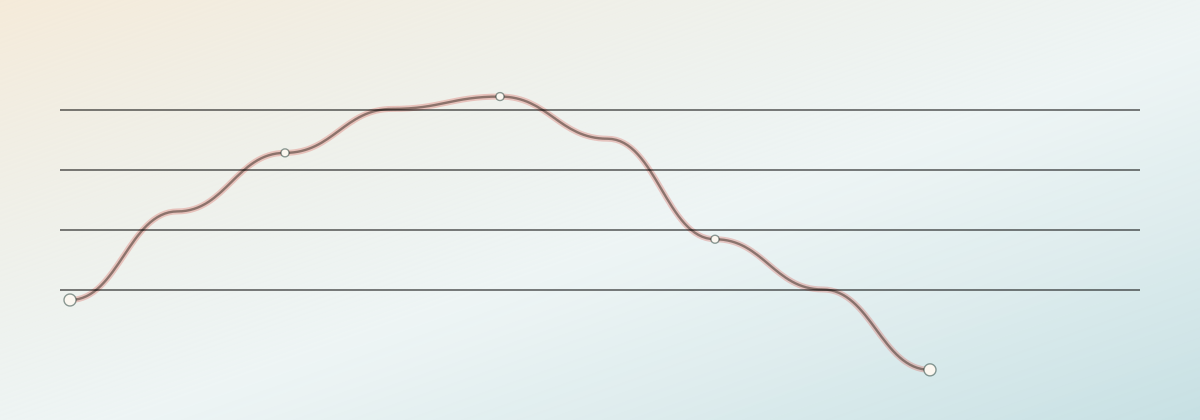
Sing a slow slide from a fifth below your break to a fifth above it, taking six seconds, on a single vowel. Then do the same slide again, but roll a lip trill through it. Then again on a hum. Three versions of the same slide, four repetitions each, taking about four minutes total. The trill version is the diagnostic: where the buzz changes character is where the configuration changes.
Vary the speed
Once the six-second slide is even, do it in three seconds, then in one and a half seconds, then back to six. Speed changes what the coordination has to do: a slow slide is about maintaining closure, a fast slide is about arriving at the new configuration before the air pressure changes. Practising both builds a transition that holds up in a real phrase.
Add a stop in the middle
The hardest version: slide up to just below the break, hold the note for two seconds, then continue up through it. Holding removes the momentum that usually carries you across, so the transition has to be made deliberately. Start with a stop two semitones below the break and gradually move it closer.
Transfer to repertoire
Find the phrase in your current piece where the break is most obvious and sing it three times: as written, entirely in the register below the break, and entirely above it. Singing it in one register only shows you what the phrase sounds like without the change — and often reveals that the original problem was a vowel or a breath choice, not the register boundary itself.
Take these away
- Slides let the change spread across two or three semitones instead of one.
- The lip-trill version tells you exactly which note the configuration changes on.
- Vary the speed; a fast slide and a slow slide train different things.
Asked in lessons
How long does it take to smooth a break?
Expect six to twelve weeks of short daily practice before a phrase crossing the break sounds continuous. Progress is measured in how few notes the change spans, not in whether it disappears.
Should I practice slides if my break cracks?
Yes, but quietly and slowly. A crack during a slide is information about where the closure fails; a crack during a loud leap is just damage. Keep slides at medium-quiet volume.
Does this work for the second passaggio too?
Yes, and usually faster. The higher boundary involves less weight, so the coordination change is smaller. Many singers smooth the second one within a month of working both.